


Dry food (kibble), Holistic, Holistic Food, Raw Pet Food
Are All Dog and Cat Foods the Same?
Aug
How to Choose the Right Food for Your Dog or Cat

How can you tell whether the food you’re feeding your dog or cat is truly high quality and meets their nutritional needs?
It’s not necessarily complicated, but it does require knowing a few basic principles and learning what to look for on the label.
Two bags of pet food may look very similar while having completely different ingredient lists. On the other hand, a more expensive food isn’t automatically the best choice for every pet.
How can you evaluate the quality of a pet food?
A good place to start is the ingredient list.
Just as with our own food, it’s worth learning how to read labels and understand where the nutrients actually come from.
Protein: one of the first things to evaluate
Protein is one of the first things we look at at Heidi & cie. For both dogs and cats, we prefer clearly identified animal protein sources.
We would much rather see ingredients such as chicken, duck, lamb, salmon or another specifically identified meat or fish than a vague term like “meat by-products.”
It’s also important to consider where ingredients appear on the label. Fresh meat contains a great deal of water, so once that moisture is removed during manufacturing, its actual contribution to the protein content may be lower than its position on the list suggests.
That’s why it’s worth checking whether other clearly identified animal protein sources appear among the following ingredients.
Corn, wheat, soy and by-products
At Heidi & cie, we’ve chosen not to carry any foods containing wheat, corn, soy, or chicken, poultry or meat by-products.
This standard applies to our most affordable options as well. In our view, an economical food shouldn’t rely on ingredients we don’t consider worthwhile.
We’ve also seen dental formulas that contain large amounts of corn, soy or corn protein. While these ingredients can reduce manufacturing costs, we prefer recipes built around clearly identified animal proteins.
Grains: the market has changed considerably
It would be far too simplistic to say that all grains are bad or that grain-free food is automatically better.
Today’s pet food market includes several grains that we consider very interesting ingredients.
These include rolled oats, whole oats, whole millet, quinoa, chia seeds and ground whole flaxseed.
Product lines such as Acana Healthy Grains and Orijen Amazing Grains are good examples of this evolution.
Rather than choosing food simply because it is “with grains” or “grain-free,” it’s much more useful to evaluate which grains are used, where they appear in the recipe, and how they’re paired with quality protein sources.
The source of fat matters too
Healthy fats deserve just as much attention. Fish oils, for example, can provide valuable omega-3 fatty acids.
As with proteins, we prefer clearly identified fat sources. Ingredient quality, freshness and the overall recipe should always be considered together.
More targeted formulas than ever before
Manufacturers now offer a much wider variety of recipes designed for specific needs. Some existing formulas have improved, while entirely new options continue to appear.
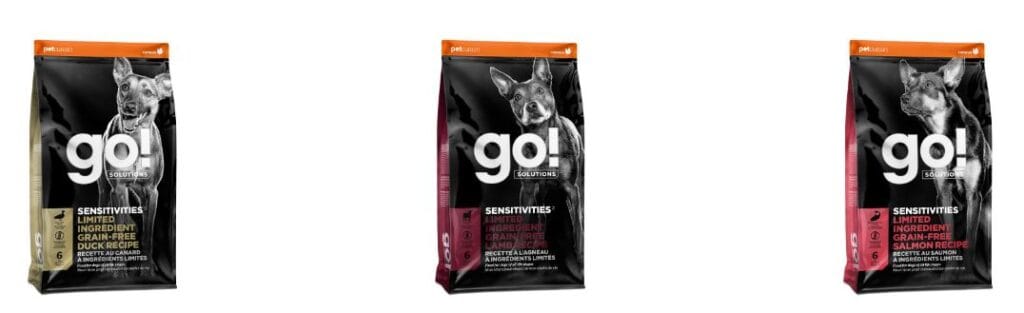
- 🦷 Dental health → Modern dental formulas from brands such as GO! SOLUTIONS, Oven-Baked Tradition and Nutrience Care now feature much more interesting ingredient profiles, including clearly identified animal proteins.
- 🐕 Skin & coat → Many recipes now emphasize quality protein sources and omega-3-rich ingredients.
- 🍽️ Sensitive digestion → Specialized formulas are designed to be easier to digest for pets with sensitive stomachs.
- 🌾 Food sensitivities → Limited-ingredient diets and a wider variety of protein sources make it easier to tailor nutrition to individual pets.
- 🫘 Legume-free recipes → More options are becoming available for owners looking for formulas without peas, lentils or other legumes.
A label such as “dental,” “skin,” or “digestive” isn’t enough on its own to judge quality. We always look at the complete formulation.
What about life stages?
Some foods are formulated to be fed throughout every life stage, while others are specifically designed for puppies, kittens, adults or seniors.
These recipes may differ in protein, fat, mineral levels and other nutrients to better match each stage of life.
Kibble size also varies between brands. Some recipes feature smaller kibble for puppies or small breeds, while others use larger pieces for bigger dogs.
However, one kibble size can work perfectly well for many dogs. Brands like Fromm successfully use a single kibble size across multiple breeds. Kibble size alone is not a measure of quality.
The important thing is choosing a food that matches your dog’s or cat’s actual needs, rather than selecting a product because one feature sounds more appealing on the package.
What about veterinary diets?
In certain medical situations, a therapeutic diet recommended by your veterinarian may be the right choice. It depends on your pet’s health condition and specific needs.
When a therapeutic diet isn’t required, it’s often worthwhile comparing the available options and looking closely at the ingredients and formulation instead of choosing a food simply because it’s labeled “veterinary.”
This is especially true for dental diets, whose formulations have improved considerably in recent years.
Of course, food doesn’t replace regular dental care.
Food sensitivities or intolerances?
Some dogs and cats develop sensitivities or intolerances to certain ingredients. In those cases, identifying the trigger with the help of a veterinary professional is often necessary.
Depending on the situation, a limited-ingredient diet or an alternative protein source may be appropriate.
Today, there are many recipes featuring proteins such as lamb, duck, fish, venison and other animal sources.
The best food is the one that fits your pet
Even an excellent food may not be the right choice for every dog or cat.
Every animal is unique. Age, activity level, body condition, sensitivities, preferences and digestive tolerance all need to be considered.
The goal is to find a food with a strong overall formulation that genuinely suits your companion.
But my dog or cat loves their current food!
Taste is certainly important—but pets can’t evaluate nutritional quality.
A dog or cat may absolutely love a food because of its aroma or texture, without it necessarily being the healthiest choice.
That’s why owners should evaluate protein sources, fat quality, vitamins, minerals and the overall formulation.
Whenever possible, we recommend starting with a sample, a trial size or the smallest available bag.
We regularly carry trial sizes for many premium brands in our Longueuil and Rosemont stores.
Many owners also tell us they’ve noticed improvements after switching to a better-suited food, including better digestion, smaller stools, a healthier coat or increased energy. Every pet is different, so results naturally vary.
What about raw feeding?
Raw feeding has become an increasingly popular option for many pet owners.
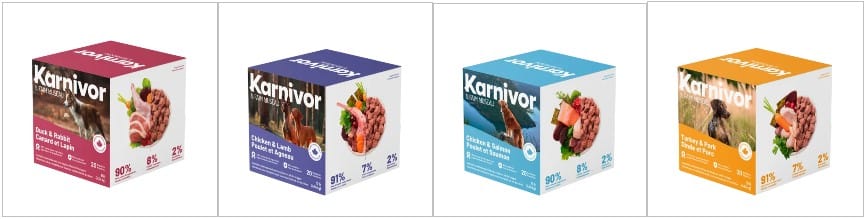
At Heidi & cie, we’ve carried several well-balanced raw food brands over the years, including:
- Aliments 5 Étoiles
- Karnivor
- Big Country Raw
- Faim Museau
- Pür Evolution
With raw food, it’s especially important to choose recipes that are complete and nutritionally balanced. Consistency from batch to batch also matters.
Recipes that vary significantly in composition can make it more difficult to provide balanced nutrition, particularly for growing puppies.
See our selection of raw foods at Heidi & Cie
How we select dog and cat foods at Heidi & cie
We choose the foods we carry based on several criteria: ingredient quality, protein sources, overall formulation, specific nutritional needs and value for money.
Our selection includes different nutritional approaches, including recipes with quality grains, grain-free formulas, limited-ingredient diets and targeted nutrition for digestion, skin, food sensitivities and dental health.
Our goal is to offer excellent choices across different price ranges without compromising the standards that guide our selection.
Dry food brands available at Heidi & cie
See our dry food brands available at Heidi & cie
Brands offering recipes with grains
Acana Classic & Healthy Grains, CaniSource, FirstMate, Fromm, GO! SOLUTIONS, Lifetime, Nutram, Nutrience, Orijen and ProSeries.
Brands offering grain-free recipes
Acana, Boréal, CaniSource, Nutrience Care, Farmina, FirstMate, Fromm, GO! SOLUTIONS, now fresh, Horizon, Hurraw, Lifetime Grain-Free, Orijen, Nutram, Valens and Wholesome Blend.
Limited-ingredient options
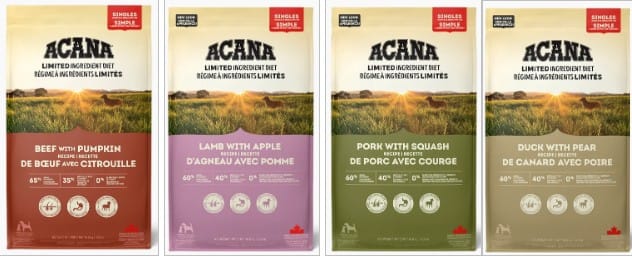
We also offer several limited-ingredient diets featuring different protein sources, including lamb, pork, duck and other alternatives.
Our experience at Heidi & cie
For nearly 20 years, we’ve helped dog and cat owners choose the food that’s best suited to their companions.
Over the years, we’ve compared countless recipes and listened to thousands of owners. One lesson stands out above all:
The best food isn’t necessarily the same for every pet.
That’s why our recommendations are always based on each animal’s individual needs and the true quality of the formulation—not on a single brand or trend.
Learn more
Explore our educational guides on dog and cat nutrition at Jaï du Pif.
Key takeaway
Not all dog and cat foods offer the same nutritional quality.
The best choice depends on ingredients, protein and fat sources, the overall formulation, and your pet’s unique needs.
Today’s market offers more high-quality options than ever before, whether you’re looking for better dental health, sensitive digestion, healthier skin and coat, limited-ingredient diets, or recipes with or without grains.
If you have questions about your dog’s or cat’s nutrition, come visit us—we’ll be happy to help!
See also:
How to calculate the Protein content in Pet foods ?
Heidi & cie – Longueuil | Heidi & cie – Rosemont |
